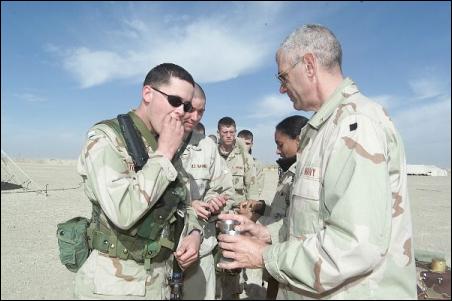
There is no doubt that when a person returns from war, they are never the same. When a person is at war, on the battlefield, they experience things that can traumatize and scar them for life. Being a young individual these experiences can have a tremendous effect on the rest of their lives and can either make you or ruin you.
“Children’s nervous systems are immature, making it harder for them to handle emotion.” – Roger Pitman, MD
Pitman, who works in the psychiatry departments at both Harvard Medical School and Massachusetts General Hospital in Boston, believes children and adolescents alike should not be involved in wars because they are most at risk of suffering severe side effects afterwards.
Researchers Judith Pizarro, MA, Roxane Cohen Silver, PhD, and JoAnn Prause, PhD, wrote a study in the "Archives of General Psychiatry" that stated the following:
“Young soldiers are likelier to have physical and psychological symptoms than older veterans.”
Their report can be found on the following link:
http://archpsyc.ama-assn.org/cgi/content/abstract/63/2/193?maxtoshow=&HITS=10&hits=10&RESULTFORMAT=&fulltext=roxanne+silver&searchid=1139327688105_1471&FIRSTINDEX=0&journalcode=archpsycTheir study was based on the medical records, death certificates, and war records of about 15,000 Union army recruits aging from 9 to 71 years. Their research concluded that “the youngest recruits also had the highest risk of dying early after the war”.
Young soldiers have their whole life ahead of them. When they enter the military, not only are they setting themselves up for a lifetime of remorse and regrets but also a lifetime of side effects and symptoms of nervous and physical diseases that can only make things worse in the end.
Sources:
Info: War Tougher On Young Soldiersa http://www.webmd.com/mental-health/news/20060206/war-rough-young-soldiers
Pics:
http://img.scoop.co.nz/stories/images/0303/5126de3fbdd0c9bfb6ba.jpeg
http://www.indymedia.ie/attachments/jun2006/ustrpstitle.peg.jpg

No comments:
Post a Comment